Dr. Andrew Ross, USF-Trained Gerontology Researcher, Uncovers Ear-Brain Signal Break
A hairline-thin nerve between your ear and brain may explain the ringing, the broken sleep, and why nothing you’ve tried has worked.

How Many of These Sound Familiar?
Rate how often each one applies to you. What you select changes what shows up below.
How often do you wake up during the night because of it?
How often do you find it impossible to tune out, even for a moment?
How often do you avoid quiet rooms, even next to people you love?
How often does your mind feel foggy, with small things slipping your memory?
How often does it feel like nothing you have tried has actually helped?
How often does it feel like it is getting worse instead of better?
Answer each question above to see your result.
You're Not Imagining This, and You're Not Alone
You’ve been told it’s just stress, just age, just something to live with. But the exhaustion is real, and so is the fog that follows right behind it.
You walk into a room and forget why. You ask someone to repeat themselves, again. Small things you used to catch without trying now slip past you completely.
Left alone, the signal doesn’t quiet down on its own. It tends to get louder, more constant, and harder to separate from your own thoughts.
And the same broken signal behind that ringing has been tied, in early research, to the kind of memory slips that worry people more than the noise itself.
The Invisible Culprit Isn't in Your Ear
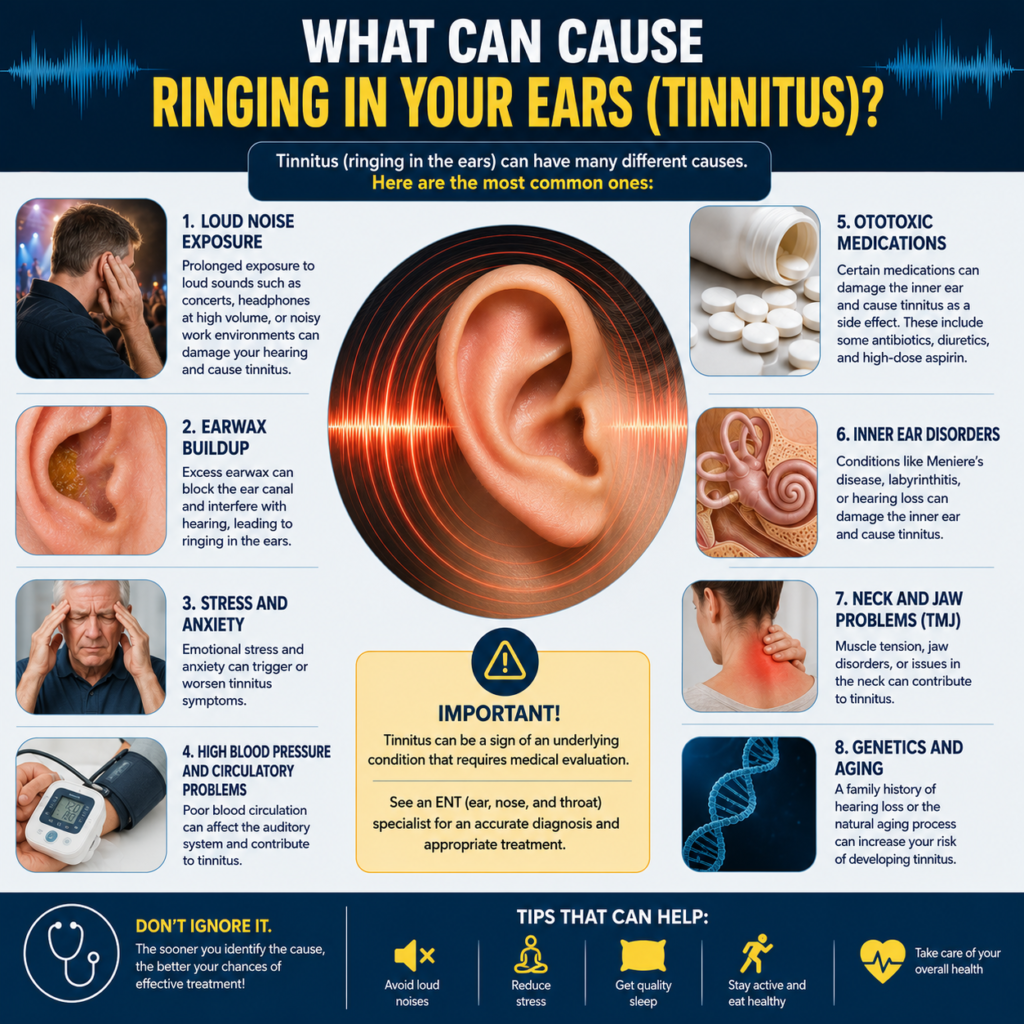
For years, treatment has focused on the ear itself. Newer research points somewhere else entirely: a fragile signal path connecting the ear to the brain. When that path frays, the brain starts filling gaps with sound that was never really there.
Researchers at Harvard, the University of Iowa, and the University of Auckland have each pointed toward this same fragile connection point. What it means, and what can be done about it, is covered in the full breakdown below.
One Family's 2 A.M. Turning Point
She brushed off the first ring as nothing, just tired ears after a long week. Within a few months it was loud enough to keep her up past two in the morning, night after night.
She started missing words mid-conversation. Then she started forgetting why she’d walked into a room at all. Quiet places, the ones that used to relax her, became the hardest part of her day.
One evening, driving home, she couldn’t make out what a police officer at her window was asking. The noise in her head drowned out his voice. Confusion took over, and what should have ended with a warning nearly ended in handcuffs.
Her doctor ran the standard tests and gave the standard answer: no cure, only ways to manage it. She had already tried the drops, the supplements, the sound machines. None of it touched the noise.
Then her son, twenty years into studying the aging brain, found a single overlooked study. It pointed to a nerve connection almost nobody was testing for. He made one phone call that changed everything that came next.
This page is for informational purposes only and is not intended to diagnose, treat, cure, or prevent any disease or condition. It does not constitute medical advice. Always consult a licensed healthcare provider before making changes related to your health. This is an advertisement. The presenter may be compensated for products purchased through links on the linked page.